If your walking pad cannot reach a pace that feels challenging, it may still be useful for easy walking but not ideal for the fast phase of Japanese walking. A machine should not be forced beyond the type of movement it was designed to support.
Check the Walking Pad Before Building the Workout
Read the manufacturer’s limits first. Check top speed, weight capacity, usable deck length, recommended footwear, control method, whether handrails are included, and whether the model is designed for brisk exercise or mainly for slow under-desk walking.
A short deck can feel comfortable at a slow work pace but cramped when cadence increases. A machine without rails also places more responsibility on balance. Do not assume that because a pad displays a higher speed, that speed is comfortable or safe for your stride.
Test the Machine Before Starting Intervals
Spend several minutes at an easy pace. Practice increasing and decreasing speed before the formal workout starts. Make sure you know what happens if you press the stop button and how quickly the belt responds to the remote.
Notice whether you naturally drift toward the front or back of the deck at higher speeds. If you feel crowded or unstable, lower the speed. Stability matters more than reaching a particular number.
How to Set Fast and Easy Intervals
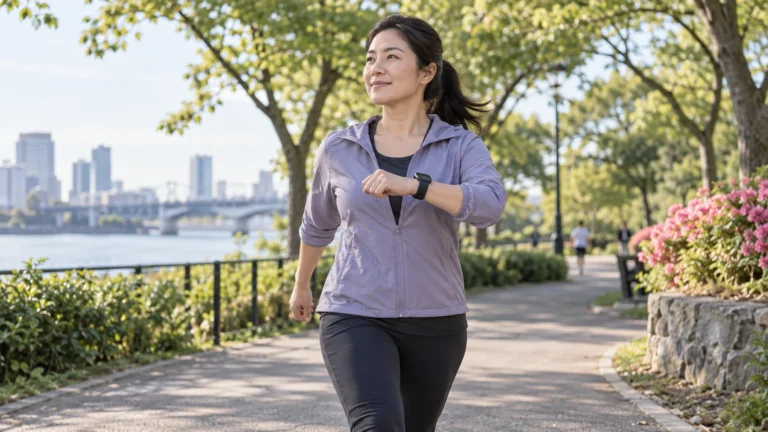
Warm up at an easy pace. Then increase the speed gradually until your breathing becomes noticeably faster while you maintain a natural walking gait. Hold that pace for three minutes, then lower the speed for three minutes of recovery.
Use a timer or an interval app. If the pad’s remote is slow to respond, start the speed change a few seconds before the interval boundary instead of making a rushed adjustment.
Beginners can start with two or three cycles. The standard five-cycle version can come later when the machine feels predictable and the pace changes are comfortable.
What Speed Should You Use?
There is no universal walking-pad speed for Japanese walking. The original interval-walking research used relative intensity, not one mph setting. Your brisk pace should feel clearly harder than your easy pace while staying controlled.
Use the talk test. During the easy interval, normal conversation should be comfortable. During the brisk phase, breathing should be noticeably faster. If you are forced into a jog or feel that the deck is too short for the pace, slow down.
What If the Walking Pad Is Too Slow?
You have several options. Use the pad for the easy intervals and perform the brisk intervals off the machine on a safe floor or outdoor route. Use a full treadmill for dedicated interval sessions. Or treat the pad as an easy-walking tool rather than trying to turn it into equipment it was not designed to be.
A more purposeful arm swing can raise effort slightly, but it should not become exaggerated or compromise balance. Avoid holding weights while using a pad unless the equipment and your training plan specifically support that choice.
Do Not Create a DIY Incline
Do not place blocks, books, plates or other objects under a walking pad to manufacture incline unless the manufacturer explicitly approves that setup. Altering the machine’s angle can change belt tracking, stability and load in ways the device was not designed to handle.
If you need more intensity than the pad can safely provide, the better solution is a different walking environment, not an improvised modification.
Desk Use vs Workout Use
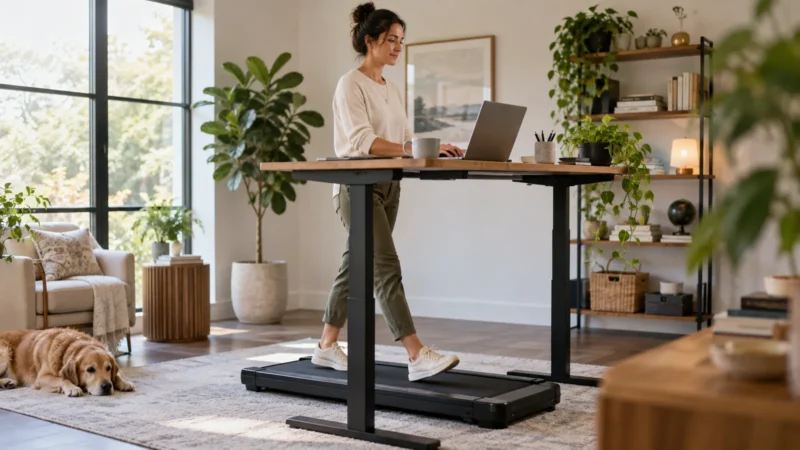
Under-desk walking usually prioritizes low speed so you can type, read or work. Japanese walking requires enough attention to manage a purposeful brisk pace and repeated speed changes. Trying to type through the fast intervals can reduce awareness and increase the chance of missteps.
If you use the same pad for work and exercise, treat the interval session as a separate workout. Move the desk surface if necessary and give the walking task your full attention.
Remote Controls and Speed Transitions
Keep the remote in your hand or in a secure, reachable location. Practice increasing and decreasing speed during the warm-up. If the machine requires multiple button presses, make changes gradually.
Never step off the moving belt to search for the remote. Stop the machine first if you lose control of the settings.
Walking Pad vs Treadmill for Japanese Walking
A treadmill usually offers a longer deck, higher speed range, incline, handrails and larger controls. A walking pad is more compact and easier to store, but those conveniences come with limits.
If your brisk walking speed fits comfortably within the pad’s range and you feel stable, the pad may be sufficient. If you need more speed, incline or rails, a treadmill is usually the more flexible option.
Walking Pad vs Outdoor Intervals
Outdoor walking removes machine speed limits and allows natural changes in pace, but weather, traffic and terrain can interrupt the intervals. A walking pad offers convenience and precise timing but less room for stride variation.
You can use both. For example, do brisk/easy outdoor sessions when conditions are good and use the pad for easy walking or shorter intervals when weather is poor.
How to Progress on a Walking Pad
First increase the number of quality cycles. Then make small speed adjustments if the machine has room. Do not chase the pad’s maximum speed simply because it is available. The fastest setting is not automatically the right training setting.
Progress can also show up as easier recovery, better control and the ability to maintain the same brisk speed with lower perceived effort.
A Beginner Walking-Pad Progression
- Session 1: warm up and complete two fast/easy cycles.
- Session 2: repeat the same settings and focus on smooth transitions.
- Session 3: add a third cycle if recovery was good.
- Session 4–5: repeat three cycles and assess whether the fast pace still feels purposeful.
- Later: add a fourth or fifth cycle before increasing speed substantially.
What About Shoes?
Use shoes that feel stable on the belt and fit well. Very loose slippers, socks on a slick deck, or footwear with poor grip can increase the chance of a misstep. Follow the device manufacturer’s footwear recommendations.
How to Set Up the Space Around the Pad
Keep cords, pets, children, chairs and loose objects away from the belt. Use the pad on a stable surface. If a mat is recommended by the manufacturer, use one that does not let the machine slide.
Leave enough space behind the pad that a stumble does not send you directly into furniture or a wall.
Common Walking-Pad Safety Mistakes
- Using a speed that is too fast for the deck length.
- Looking down at a phone while the belt is moving quickly.
- Trying to work at a desk during high-effort intervals.
- Creating an unapproved DIY incline.
- Placing the pad on an unstable or slippery floor.
- Allowing pets, cords or loose objects near the belt.
- Ignoring the manufacturer’s weight or speed limits.
- Trying to match treadmill speeds on a compact device.
A Sample Walking-Pad Session
Warm up for 5–10 minutes. Complete two or three 3-minute brisk / 3-minute easy cycles the first time you test the setup. If the pad feels stable and you recover well, build toward five cycles over later sessions. Cool down before stepping off.
When a Walking Pad Is Not Enough
If you cannot create a meaningful fast interval without reaching an unsafe gait, the correct response is not to improvise. Use another walking environment for the hard phase. Japanese walking is defined by relative effort, not by loyalty to a specific machine.
For broader walking, home-fitness, and body-transformation guidance, explore Mayobook’s Fitness, Weight Loss & Body Transformation hub.
When to Stop
Stop if you feel unsteady, cannot control the remote, develop sharp pain, experience unusual dizziness, or notice symptoms that feel medically concerning. Equipment convenience should never override basic exercise safety.
A walking pad can be a useful tool when its limitations match your pace. The safest setup respects the device, keeps the fast/easy contrast clear, and avoids turning compact equipment into a high-speed treadmill by force.