Carvacrol (Primary Active Compound)
- Powerful antibacterial and antifungal action
- Helps disrupt harmful microbes at the cellular level
- Supports immune defense against infections
- Considered the main driver of oregano oil’s antimicrobial strength

Oregano oil explained at a glance—key compounds, antimicrobial benefits, and safe, effective uses for natural infection support.
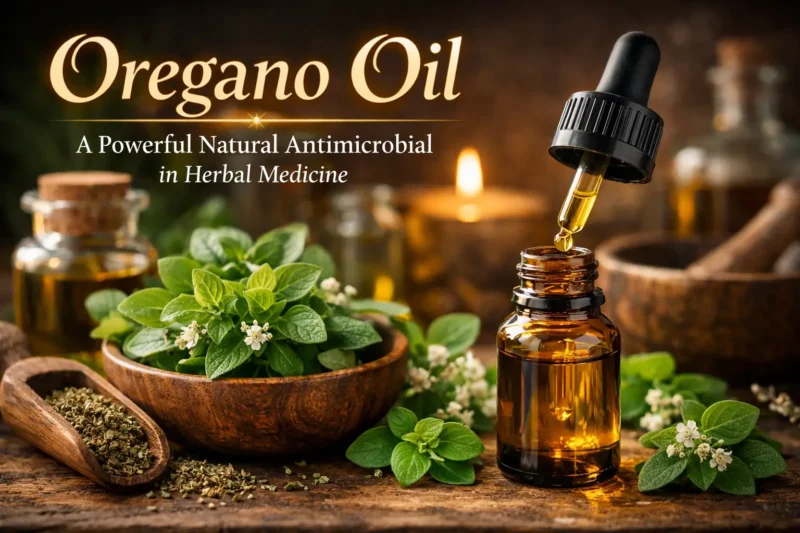
Oregano oil is a concentrated herbal extract rich in compounds like carvacrol and thymol, known for its natural antimicrobial, antifungal, and immune-supporting properties.
Oregano oil matters because it offers a natural way to support the body against infections without relying solely on pharmaceuticals. It’s commonly used at the first signs of illness, for mild infections, or to support immune and digestive health. It fits best as a complementary remedy—helping with prevention, early intervention, and recovery rather than replacing essential medical treatment.
Use this map to move through the concept in a clear order: meaning, mechanism, use, and wider context.
What Is Oregano Oil?
Oregano oil is a concentrated extract derived from the leaves of the oregano plant, most commonly Origanum vulgare. It has been used for centuries in traditional medicine for its strong antimicrobial and healing properties.
Today, it is widely recognized as one of the most potent natural compounds used in herbal medicine—especially for supporting the body during infections.
The strength of oregano oil comes from its active compounds, particularly:
These natural substances are responsible for its:
They work by disrupting harmful microorganisms and making it difficult for them to survive and reproduce.
Oregano oil does not act in just one way. Its effectiveness comes from multiple mechanisms working together.
Carvacrol can penetrate and weaken the outer structure of bacteria and fungi. This leads to:
Oregano oil can slow or stop the replication of harmful microbes, giving your immune system time to respond effectively.
In addition to directly targeting pathogens, oregano oil may help:
Oregano oil also has anti-inflammatory properties, which can:
Oregano oil is often used in herbal medicine for:
It is especially popular as part of natural protocols for managing infections.
Oregano oil is available in different forms:
The form used can affect:
Because oregano oil is highly concentrated, proper use is essential.
When in doubt, it’s best to seek professional advice.
Oregano oil differs from pharmaceutical antibiotics in several ways:
However, it may not replace conventional antibiotics in serious infections.
Oregano oil is not just a remedy—it is often a core component in many herbal protocols.
It is commonly used alongside other herbs to:
Understanding oregano oil is one thing.
Using it properly in real situations is another.
If you want to know:
👉 that’s where structured guidance matters.
Herbal Antibiotics & Antivirals Handbook walks through practical applications step by step.
Oregano oil is one of the most powerful natural tools available in herbal medicine.
But like all powerful tools, its effectiveness depends on:
Used correctly, it can play a major role in supporting your body’s ability to fight infection naturally.
The key distinction most people miss is that oregano oil isn’t just a “natural antibiotic.” It doesn’t only kill microbes—it also supports the body’s immune response and internal balance. This means it works best when used strategically and short-term, not as a constant replacement for conventional treatment.
Use these connected pages for the next step.

When most people think of antibiotics, they imagine…
Read this next
See how this concept fits into the broader…
Open the hub
If you’re looking for a complete, structured approach to natural infection defense—not just a list ...…
Explore the booksWhen the overview is clear but practical application still matters, this deeper resource shows how the concept fits into a complete framework and how to use it well.
Used with care and intention, oregano oil isn’t just a remedy—it’s a powerful ally. The real value lies in knowing when to use it, how to use it, and respecting its strength so it supports healing without creating imbalance.