
How Historically Accurate Is Gladiator’s Marcus Aurelius?
Gladiator captures a recognizable Roman frontier world, but its Marcus Aurelius plot is largely fictional. Commodus did not murder Marcus, Maximus never existed, and the succession was settled years before the emperor’s death.

Keep Learning—Listen Free
Short, practical audiobooks for your next step.

Imposter Syndrome: Why Success Still Makes You Feel Like a Fraud | Full Audiobook
Imposter syndrome can make real success feel undeserved and every new achievement…

How to Stop Catastrophizing: Break the Worst-Case Thinking Loop | Full Audiobook
Learn how to stop catastrophizing and break the worst-case thinking loop that…

Emotionally Immature Parents: How Their Patterns Shape Your Adult Life | Full Audiobook
Emotionally immature parents can shape adult relationships, boundaries, self-worth and the way…

High-Functioning Anxiety: Why You Look Fine but Never Feel at Peace | Full Audiobook
High-functioning anxiety can make you look calm, capable and successful while constant…

The Art of War Explained: Sun Tzu’s Strategy for Winning Without Fighting | Full Audiobook
The Art of War, Sun Tzu, Art of War explained, strategy, winning…

Arthur Schopenhauer: Why You’re Never Satisfied — The Psychology of Desire | Full Audiobook
Arthur Schopenhauer, Schopenhauer philosophy, the psychology of desire, hedonic adaptation, the hedonic…

Friedrich Nietzsche: What “God Is Dead” Really Means — And How to Create Meaning | Full Audiobook
Friedrich Nietzsche, “God is dead,” Nietzsche philosophy, nihilism, existentialism, the meaning of…

High Agency: How to Become the Person Who Always Finds a Way | Full Audiobook
High agency is the psychology of becoming resourceful, taking initiative, and creating…

How to Find Your Purpose When You Feel Lost: Build a Life That Actually Means Something
Learn how to find your purpose when you feel lost, discover what…
Ridley Scott's Gladiator gave millions of viewers their most vivid image of Marcus Aurelius: an aging philosopher-emperor on the northern frontier, disappointed in Commodus, hoping to restore republican government, and secretly choosing the fictional general Maximus as a better successor. The setting borrows from real history. The central plot does not.
Gladiator Gets the Era Right More Than the Plot
The film places Marcus in a world of frontier war, dynastic anxiety, imperial ceremony, and a difficult relationship between military power and politics. Those ingredients are historically recognizable. Marcus really did spend substantial time campaigning in the north during the Marcomannic Wars, and Commodus really did succeed him in 180.
But the story connecting those facts is dramatic invention. The film rewrites Marcus's death, Commodus's legal position, the idea of a successor named Maximus, and Marcus's supposed plan to restore the Republic.
Marcus Aurelius Was Not Murdered by Commodus
There is no credible historical basis for the film's scene in which Commodus suffocates his father after learning he will be passed over. Marcus died in 180 after illness while in the northern campaigning region. Ancient sources differ on details, and modern historians cannot identify the exact disease with certainty.
The murder is an effective dramatic device because it establishes Commodus immediately as a villain and turns succession into a moral crime. It is not a historical account.
Commodus Was Already the Chosen Heir and Co-Emperor
The film's biggest structural invention is the idea that Marcus suddenly decides to deny Commodus the throne. Commodus was Marcus's biological son and had been publicly advanced within the imperial succession for years. He received the title of Caesar as a child and was elevated to co-emperor in 177, before Marcus's death.
That means there was no historical Maximus standing between Commodus and power. The character of Maximus Decimus Meridius is fictional, even if aspects of his military persona may echo features of several Roman figures.
Was Marcus Trying to Restore the Roman Republic?
The movie gives Marcus a grand constitutional purpose: return power to the Senate and end imperial rule. Historians do not have evidence for such a plan. Marcus could value senatorial cooperation and Stoic ideas of justice without seeking to abolish the imperial system that he headed and had spent decades sustaining.
Projecting a modern-style restoration of representative government onto second-century Roman politics creates an emotionally legible conflict for the film, but it should not be mistaken for Marcus's documented political program.
The Film’s Philosopher-Emperor: Fair Portrait or Idealization?
Here the answer is more nuanced. Marcus really was a serious Stoic practitioner, and Meditations reveals a ruler deeply preoccupied with self-command, duty, death, fame, justice, and the moral danger of power. The film is therefore not wrong to portray philosophy as central to his identity.
What it idealizes is the relationship between private aspiration and public record. Meditations tells us what Marcus reminded himself to value; it does not prove that every imperial decision perfectly expressed those values. His reign included prolonged warfare, the contested question of Christian persecution under his rule, and the succession of Commodus. A historical Marcus is more interesting than a spotless philosopher-king.
What the Film Gets Right About the Northern Wars
The opening places Marcus's army in conflict with Germanic peoples on Rome's northern frontier. That broad setting reflects reality: the later reign was dominated by the Marcomannic Wars along the Danube and beyond. Marcus spent years near the theater of operations.
The specific battle choreography, compressed chronology, military dialogue, and visual details are cinematic reconstruction. The film uses the wars chiefly to establish Maximus as a victorious commander and Marcus as an emperor on the edge of death.
Film vs History: The Key Claims Checked
| Claim in Gladiator | Historical verdict | What we know |
|---|---|---|
| Commodus murders Marcus | False | Marcus died from illness in 180; exact diagnosis is uncertain |
| Marcus chooses Maximus as successor | False | Maximus is fictional; Commodus had long been designated and was co-emperor |
| Marcus plans to restore the Republic | Unsupported | No evidence for a plan to abolish the principate and return sovereign power to the Senate |
| Marcus campaigns in the north | Broadly true | The Marcomannic Wars dominated much of his later reign |
| Commodus and Lucilla are Marcus's children | True | Both were children of Marcus Aurelius and Faustina the Younger |
| Commodus's succession is a last-minute crisis | False | His advancement began years earlier and co-rule was established before 180 |
Why Gladiator’s Inaccuracies Still Matter
Historical fiction is allowed to invent. The problem arises when dramatic inventions become the default public biography of a real person. Gladiator turns Marcus into the wise father who recognized the danger of Commodus too late and tried to save Rome through a virtuous outsider. Real history is less tidy: Marcus himself helped create the succession that later damaged his reputation.
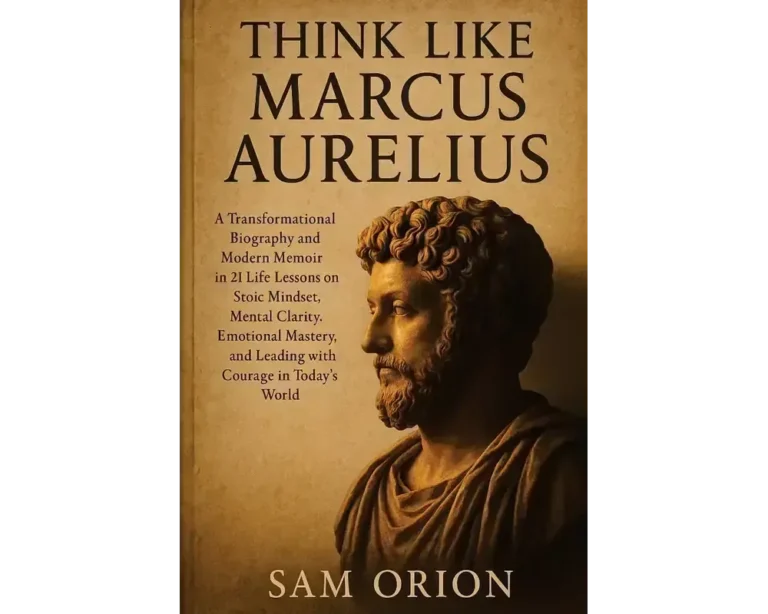
That tension gives readers something more useful than a fact-check score. It shows why Marcus Aurelius should be read neither through movie villain-versus-hero logic nor through devotional Stoic legend. He was an emperor inside a dynastic and military system, a philosopher struggling with power, and a historical actor whose choices deserve the same scrutiny he applied to himself. For the broader practical and philosophical portrait beyond the film, Think Like Marcus Aurelius places his ideas alongside the historical pressures of his life and reign.
Want the complete system?
Explore the full book for a deeper, structured guide.
Think Like Marcus Aurelius
Discover timeless Stoic wisdom reimagined for the modern world. Think Like Marcus Aurelius blends biography and memoir to deliver 21 powerful life lessons on…
View the BookKeep exploring

Money, Business & Personal Growth
See the wider Mayobook topic hub with guides, answers, comparisons, and books.
Explore the topic
Stoic Journaling Like Marcus Aurelius: A Practical Guide to Daily Reflection
Go deeper with a longer structured guide connected to this topic.
View guide