
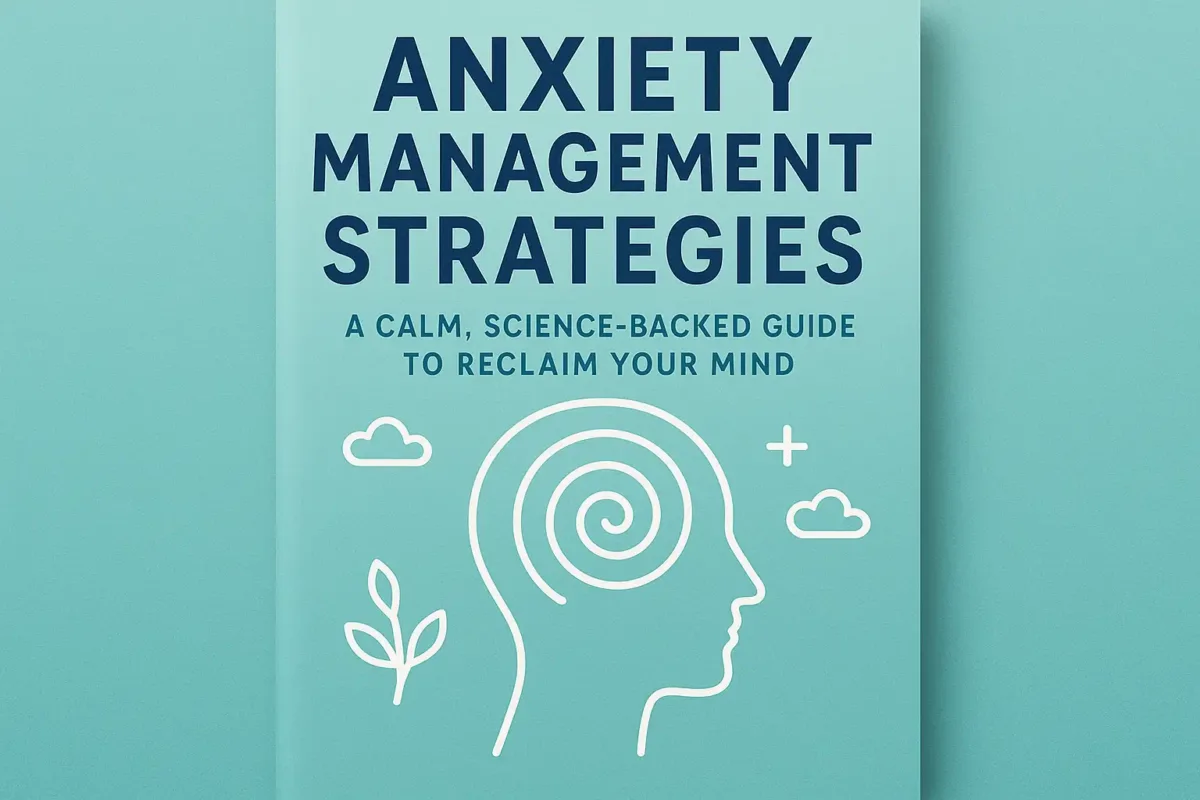
Anxiety wears many disguises. For some, it arrives like a sudden wave – a racing heart, trembling hands, thoughts spiraling out of control. For others, it lingers quietly in the background, a constant tightness in the chest or a fear that never fully dissolves. If you are searching for anxiety management strategies, it is not because you are weak or overly emotional – it is because your nervous system has learned to stay in a protective state for longer than necessary.
Modern neuroscience shows that anxiety is not a flaw in your personality. It is a survival mechanism working overtime. And with the right tools, it can be retrained. Anxiety is a full-body experience: your thoughts, your breath, your muscles, your heartbeat, your digestion, and even your sleep patterns are involved. When you understand what is happening inside you, the shame softens and real healing can begin.
In this comprehensive, emotionally intelligent guide, you will explore science-backed, trauma-informed methods to calm your mind, regulate your body and regain a sense of inner safety. You will learn grounding practices, cognitive strategies, mindfulness techniques, lifestyle shifts and emotional regulation tools – all designed to support long-term change, not just temporary relief.
These are not quick fixes or superficial hacks. They are deep, steady, grounded strategies that align with your mind, body, emotions and nervous system.
What Anxiety Really Is – Understanding Your Nervous System’s Role
Before any anxiety management strategies can truly help, it is essential to understand what anxiety actually is. Anxiety is not just overthinking, and it is not simply a mental problem. It is a full-body response driven by your nervous system and shaped by your experiences.
Here is what happens inside you during anxiety:
Your amygdala detects a threat.
This threat can be external – criticism, conflict, overwhelm – or internal, such as fear of failure, rumination or trauma memories. The amygdala acts like a smoke detector, triggering the alarm even when the fire is small or imagined.
Your body shifts into protection mode.
Stress hormones like cortisol and adrenaline flood your system. Your heart rate rises, your breathing becomes shallow, your muscles tense and digestion slows. Your body is preparing you to fight, flee or freeze.
Your rational brain goes partially offline.
The prefrontal cortex – responsible for reasoning, decision-making and emotional regulation – becomes less active. This is why it feels almost impossible to ‘just calm down’ in the middle of intense anxiety.
Your mind spirals.
Thoughts speed up and often jump to worst-case scenarios. You may catastrophize, imagine future disasters or replay past events with harsh self-judgment.
When you see anxiety as a nervous system pattern instead of a personal failing, compassion becomes possible. And compassion is the first step toward healing.
Fast, Effective Grounding Tools to Calm Anxiety in the Moment
When anxiety spikes, the most helpful anxiety management strategies are the ones that bring your body back into a sense of safety. Grounding tools interrupt the stress response and make space for your thinking brain to return.
The 4–7–8 Breath
This simple breathing pattern slows your heartbeat and activates the parasympathetic nervous system – your body’s natural calm response.
How to practice:
- Inhale gently through your nose for 4 seconds.
- Hold your breath for 7 seconds.
- Exhale slowly through your mouth for 8 seconds.
- Repeat the cycle 4–6 times.
This technique tells your body that the danger has passed, even if your mind has not fully caught up yet.
The 5–4–3–2–1 Sensory Awareness Method
This grounding exercise helps you shift out of anxious thoughts and into your immediate environment.
Gently name:
- 5 things you can see
- 4 things you can feel (touch)
- 3 things you can hear
- 2 things you can smell
- 1 thing you can taste
By engaging your senses, you anchor yourself in the present moment, where anxiety has less room to dominate.
Cold Sensation Reset
Cold exposure activates the dive reflex, a built-in calming mechanism in the body.
Try:
- Splashing cold water on your face.
- Holding an ice cube in your hand.
- Stepping outside into cool air.
This quick shift in physical sensation can interrupt a rising wave of panic and help the nervous system reset.
Somatic Tremoring
Animals naturally shake after stressful events to discharge excess energy. Humans tend to suppress this, which can keep anxiety stored in the body.
Stand or sit comfortably and gently shake your hands, arms, shoulders and legs for 20–30 seconds. Imagine the tension flowing out of your body. This simple somatic practice can release built-up stress and prevent it from solidifying into chronic anxiety.
Cognitive Practices That Break the Anxiety-Thinking Loop
Once your body begins to settle, you can work with your thoughts more effectively. Cognitive strategies help you step out of spirals of worry and see your inner dialogue more clearly and compassionately.
‘Name the Story’ Technique
When anxious thoughts arise, they often follow familiar themes: fear of failure, fear of rejection, fear of loss, fear of embarrassment. Rather than getting pulled into them, you can gently name them.
For example:
- This is the ‘I will fail’ story.
- This is the ‘everyone is judging me’ story.
- This is the ‘something terrible will happen’ story.
By calling it a story, you create psychological distance. You are no longer fully inside the thought. You are the observer, and the thought becomes something you can respond to rather than obey.
Fact vs. Assumption Check
Anxiety rarely deals in pure facts. It blends memory, fear and imagination into one loud narrative. A simple but powerful anxiety management strategy is to ask:
- Is this a fact, or is this an assumption?
- What evidence supports this thought?
- What evidence contradicts it?
- If a friend had this thought, what would I gently tell them?
This kind of reflective questioning, inspired by cognitive behavioral therapy, helps loosen the grip of anxious beliefs and reconnect you with reality.
Self-Distanced Language
Language is a subtle but powerful tool. Changing how you speak to yourself can change how your brain processes your experience.
Instead of saying, ‘I am anxious’, you might say:
- ‘I am noticing anxiety in my body right now.’
- ‘My nervous system is activated, and I am supporting it.’
This shift moves you from identity (‘I am anxiety’) to experience (‘I am experiencing anxiety’), which opens more space for choice and compassion.
The Two-Column Method
Take a piece of paper or a digital note and draw a line down the middle.
- In the left column, write down your anxious thoughts as they are.
- In the right column, write a grounded, realistic, or compassionate response.
Example:
Thought: ‘Everyone will think I am incompetent.’
Response: ‘Most people are focused on themselves, and my worth is not decided by one moment.’
Writing like this slows down the spirals and engages the rational, wise part of your mind.
Mindfulness Practices That Rewire Your Brain for Calm
Mindfulness is one of the most powerful long-term anxiety management strategies because it changes the brain’s structure and function. Studies show that consistent mindfulness practice can reduce the size of the amygdala and strengthen areas of the brain involved in emotional regulation and attention.
Simple Breath Awareness
Set a timer for 60 seconds. Sit or stand comfortably. Breathe naturally and bring gentle attention to the sensation of your breath.
Notice:
- The coolness of the air as you inhale.
- The warmth as you exhale.
- The rise and fall of your chest or belly.
Your mind will wander; that is expected. Each time it does, simply guide your attention back to the breath without judgment. This returning is the practice. Over time, it strengthens your capacity to anchor yourself in the present instead of being swept away by anxious thoughts.
Mindful Body Scan
Close your eyes if it feels safe, or soften your gaze. Slowly bring attention to different parts of your body:
- Start with your feet, feeling them on the ground.
- Move up through your legs, hips and torso.
- Notice your hands, shoulders, neck and jaw.
- Observe your facial muscles and breath.
You are not trying to change anything. You are simply observing with curiosity. This practice reconnects you with your physical self, which anxiety often disconnects you from.
Labeling Emotions
When a wave of anxiety rises, you can use the ‘name it to tame it’ approach. Quietly say to yourself:
- ‘This is fear.’
- ‘This is worry.’
- ‘This is tension in my chest.’
Labeling emotions using simple words helps move activity from the emotional centers of the brain to the regions responsible for language and regulation. The emotion does not disappear, but it often becomes less overwhelming.
Watching Thoughts Like Clouds
Imagine that you are lying on your back watching the sky. Each thought that arises is like a cloud drifting past. You do not have to hold onto it, push it away or climb into it. You simply notice it and let it pass.
This imagery-based mindfulness practice teaches you that thoughts are events in the mind, not absolute truths you must obey. It can be especially helpful for people who struggle with overthinking.
Lifestyle Shifts That Reduce Anxiety at Its Root
While techniques used in the moment are valuable, many anxiety management strategies become more effective when supported by lifestyle choices that help your nervous system stay regulated.
Prioritizing Restorative Sleep
Sleep is one of the most powerful regulators of mood and anxiety. Research from UC Berkeley and other institutions shows that sleep deprivation significantly increases anxiety levels.
To support more restorative sleep:
- Keep a consistent sleep schedule, even on weekends.
- Create a calming pre-sleep routine (dim lights, gentle stretching, reading).
- Avoid screens and stimulating content at least 30–60 minutes before bed.
- Keep your sleeping space cool, dark and quiet.
Good sleep is not a luxury; it is a fundamental pillar of emotional health.
Gentle Daily Movement
You do not need intense workouts to reduce anxiety. In fact, gentle movement is often more soothing for an overwhelmed nervous system.
Consider:
- Taking a daily walk, especially in nature.
- Practicing soft yoga or stretching.
- Exploring tai chi or slow, mindful movement.
Movement helps metabolize stress hormones and releases endorphins, which naturally elevate mood and ease anxiety.
Eating to Support Your Nervous System
Your gut and brain are deeply connected. An imbalanced diet can worsen mood and anxiety, while supportive nutrition can help steady your emotional state.
To support your nervous system, try including:
- Magnesium-rich foods like leafy greens, nuts and seeds.
- Omega-3 sources like salmon, sardines, chia seeds and walnuts.
- Probiotic foods such as yogurt, kefir, kimchi or sauerkraut.
- Slow-digesting carbohydrates like oats, quinoa and sweet potatoes.
At the same time, observe how caffeine, sugar and alcohol affect your anxiety levels. Many people feel notably calmer when they reduce or remove these triggers.
Reducing Overstimulation
Modern life saturates us with information. Constant notifications, social media, emails, news and digital noise keep the nervous system on high alert.
To gently reduce overstimulation:
- Turn off non-essential notifications on your phone.
- Set specific times to check email or social media instead of constantly grazing.
- Allow yourself screen-free pockets in your day.
- Create small rituals of quiet – a few minutes of stillness, a cup of tea, a deep breath.
Your nervous system needs downtime in order to heal and regulate.
Emotional Regulation Skills for Everyday Life
Emotional regulation is the art of responding to your inner experiences with awareness instead of reacting impulsively. When you build emotional regulation skills, anxiety has less power to control your choices and behaviors.
The Pause Response
One of the simplest emotional regulation tools is a conscious pause. When you notice anxiety rising or feel triggered by a situation:
- Pause for a moment.
- Take one or two slow breaths.
- Notice what you feel in your body.
- Then choose how to respond.
This tiny gap between feeling and action can transform relationships, decision-making and self-trust.
Heart-Focused Breathing
Place one hand gently over your heart. Breathe in and out slowly, as if you are breathing directly into your heart space. As you breathe, you might silently repeat:
- ‘In this moment, I am safe enough.’
- ‘I am here for myself.’
This simple practice activates the heart-brain connection and can soften anxiety, especially when paired with self-compassion.
Reassuring Self-Talk
Anxiety often speaks in a harsh, urgent tone. You can begin to regulate your emotions by intentionally speaking to yourself in a different voice – one that is kind, steady and supportive.
Try phrases like:
- ‘This is hard, but I can handle it.’
- ‘I have survived difficult moments before.’
- ‘This feeling will not last forever.’
Over time, this inner voice becomes a powerful ally.
Anxiety Management Strategies That Build Inner Strength
Some anxiety management strategies do more than calm you in the moment – they strengthen your inner foundation and increase your overall capacity to face life with steadiness and courage.
Creating a Nervous-System-Friendly Environment
Your environment quietly shapes how safe or tense you feel. Small shifts can have a big impact:
- Declutter one small area at a time so your space feels more breathable.
- Use softer lighting instead of harsh overhead glare.
- Introduce calming colors or natural elements like plants.
- Designate one spot as your ‘calm corner’ for reading, breathing or journaling.
When your surroundings feel kinder, your nervous system can relax more easily.
Practicing Everyday Self-Compassion
Self-criticism fuels anxiety. Self-compassion softens it. Each time you respond to your own pain with gentleness instead of judgment, you teach your brain a new pattern.
You might say to yourself:
- ‘Of course I feel anxious – I have been under a lot of pressure.’
- ‘I am learning. I do not need to be perfect to be worthy of love.’
- ‘I deserve care, even when I am struggling.’
Compassion does not erase anxiety, but it makes the journey far less lonely and harsh.
Helpful Books for Anxiety, Emotional Healing and Resilience
As you explore healing, certain books can become trusted companions and guides. Within the Mayobook collection, several titles beautifully complement the anxiety work you are doing:
- The Art of Social Intelligence – for understanding emotional patterns, communication dynamics and how anxiety shows up in relationships.
- Breaking Free – a powerful support for those dealing with trauma-based anxiety, inner chaos or patterns that feel hard to escape.
- Rise to Lead – ideal if your anxiety is tied to leadership, visibility, confidence or taking up space in your own life.
- Think Like Martin Luther King Jr. – a deep dive into calm conviction, moral courage and emotional clarity under pressure.
- The Magic of Positive Affirmation – for rebuilding inner safety, self-belief and calm mindsets through carefully chosen language.
If this kind of soul-nourishing wisdom resonates with you, you can explore more transformational reads at https://mayobook.com/shop.
FAQ – Anxiety Management Strategies
What are the most effective anxiety management strategies?
The most effective anxiety management strategies combine grounding techniques, cognitive reframing, mindfulness practices, breathwork, lifestyle shifts and emotional regulation skills. Together, these tools soothe the nervous system, calm the mind and build long-term resilience instead of just masking symptoms.
How can I calm anxiety quickly when it spikes?
To calm anxiety quickly, use practices that directly affect the body: the 4–7–8 breath, cold water on your face, the 5–4–3–2–1 sensory method or gentle somatic shaking. These techniques send powerful signals to your brain that help bring you out of fight-or-flight and back into balance.
Why do anxiety management strategies focus so much on the body?
Because anxiety is a full-body response. The nervous system reacts before the mind can catch up, which is why working with breath, movement, sensation and environment is so effective. When the body begins to feel safe, the mind naturally follows.
Can mindfulness really reduce long-term anxiety?
Yes. Mindfulness practices, when done consistently, have been shown to reduce amygdala activity and strengthen regions of the brain responsible for emotional regulation and attention. Over time, this means you are less reactive, more grounded and better able to navigate anxious moments.
What lifestyle changes help reduce anxiety the most?
Key lifestyle changes include improving sleep quality, moving your body daily, reducing digital overstimulation, nourishing your body with supportive foods and creating a more predictable daily routine. These shifts help your nervous system feel more stable, which naturally lowers anxiety.
Are anxiety management strategies helpful for chronic overthinking?
Absolutely. Grounding tools, mindfulness, journaling and cognitive strategies like the two-column method are especially effective for chronic overthinking. They help you step out of loops of worry and reconnect with the present moment and your deeper wisdom.
Can journaling help with anxiety?
Yes. Journaling gives your thoughts somewhere to go. Writing down what you are feeling, what triggered it and what you most need right now can reduce mental pressure and increase clarity. It also helps you notice patterns over time, which is valuable for healing.
How does breathwork help with anxiety?
Breathwork activates the parasympathetic nervous system, which is responsible for rest and recovery. Techniques like slow diaphragmatic breathing or the 4–7–8 pattern can lower heart rate, reduce cortisol and help you feel more grounded and in control.
What is somatic therapy, and how does it relate to anxiety?
Somatic therapy focuses on the mind-body connection. It uses movement, breath, sensations and posture to help release stored tension and trauma from the nervous system. Because anxiety is deeply embodied, somatic approaches can be especially powerful.
How can I manage anxiety in high-stress situations?
In high-stress situations, preparation and practice are key. Ground yourself beforehand with breathwork or mindfulness, use the pause response in the moment and give yourself reassurance through kind self-talk. Afterward, allow time to decompress so your nervous system can return to baseline.
Do these anxiety management strategies work for social anxiety too?
Yes. While social anxiety has its own nuances, many of the same strategies – grounding, breathwork, cognitive reframing, self-compassion and gradual exposure – are highly effective. Building emotional safety inside yourself makes it easier to be seen by others without feeling overwhelmed.
How often should I practice anxiety-reducing techniques?
Daily small practices are more powerful than occasional big ones. Think of emotional regulation like building a muscle: the more consistently you use these strategies, the stronger and more automatic they become. Over time, your baseline level of anxiety can decrease significantly.
Conclusion: You Are Not Broken – You Are Learning Safety
If you live with anxiety, it can be easy to believe that something is fundamentally wrong with you. But you are not broken. Your nervous system has simply been working overtime to protect you, sometimes long after the danger has passed.
Every slow breath, every moment of mindfulness, every boundary you set, every kind thought you offer yourself – these are not small things. They are acts of re-teaching your body and mind what safety feels like. Healing does not always look dramatic from the outside, but inside, each gentle step is reshaping your future.
You are allowed to take your time. You are allowed to need support. You are allowed to build a life where anxiety is not the loudest voice in the room.
If this spoke to you, you’ll love the full information in this book; begin your deeper reading → See the book on Mayobook.