
Self-healing is not a trend. It is not a buzzword. It is a deeply human longing to feel whole again — to soothe the parts of you that hurt, to release what you’ve carried too long, to build inner safety, and to return to yourself with compassion instead of judgment. If you are searching for self healing practices, you’re likely in a place where you want to reclaim your peace, your energy, or your emotional stability after a season of stress, heartbreak, burnout, or quiet suffering.
This article is designed to meet you exactly where you are. With gentleness. With grounded psychology. With emotional intelligence. With practices that work in real life — not in theory.
Self-healing is not about “fixing yourself.” You are not broken. Self-healing is learning how to stop abandoning yourself during difficult moments, and instead learning how to listen, soothe, and support the parts of you that have been overwhelmed, ignored, or silenced.
Here, we explore how self-healing works in the brain and body, the deeper emotional patterns behind suffering, and practical, science-supported self healing practices you can use every day to calm your nervous system, untangle old wounds, and rebuild inner strength at a pace that feels safe.
Understanding What Self-Healing Actually Means
Self-healing does not mean healing alone. It does not mean isolating yourself or becoming hyper-independent. It means reconnecting with your inner world in a way that lets you understand what hurts, why it hurts, what your heart needs, and how to give yourself that support intentionally.
Most people think healing begins with answers. But real healing begins with awareness.
Self-healing is the art of noticing your emotional triggers, your patterns, your nervous system’s reactions, and the deeper beliefs that shape your behavior — without shaming yourself for them.
Psychologists call this interoception: the ability to feel and interpret what’s happening inside your body and emotional world. When you develop interoceptive awareness, you can finally differentiate between:
- fear and intuition,
- anxiety and overstimulation,
- sadness and emotional exhaustion,
- trauma response and genuine threat.
This clarity makes healing possible.
Why Self-Healing Is Necessary for Emotional Health
Life does not give us a roadmap for repairing emotional wounds. Many of us were taught to stay strong, move on, suppress emotion, “not make a big deal out of things,” or pretend we are fine. Those strategies may help you survive, but they do not help you heal.
Unhealed emotional pain often shows up as:
- chronic anxiety and overthinking,
- emotional shutdown or numbness,
- irritability and resentment,
- difficulty trusting people,
- people-pleasing and self-abandonment,
- trouble setting boundaries,
- perfectionism and burnout,
- attachment wounds and fear of rejection,
- harsh self-talk and inner criticism.
Self healing practices help you break these cycles by giving you tools to reconnect with your body, regulate your nervous system, and rebuild your sense of inner safety. Healing is not about forgetting the past — it’s about changing the way the past lives inside you.
How Self-Healing Works in the Nervous System
You cannot heal emotionally if your nervous system still believes you are in danger. This is why logic alone cannot fix your anxiety, trauma, or emotional overwhelm.
Your nervous system has three primary states:
- Safe and regulated — calm, grounded, stable.
- Fight or flight — anxiety, restlessness, irritability, panic.
- Freeze or shutdown — numbness, exhaustion, detachment, overwhelm.
Self-healing works by slowly teaching your body how to access the regulated state more consistently. You are not trying to eliminate your triggers; you are teaching your body that you can survive them without collapsing into panic or shutting down altogether.
This is why mindfulness, breathing, grounding techniques, somatic healing, and nervous system regulation lie at the heart of all real self healing practices. When your body begins to feel safe, your mind follows.
Gentle Self Healing Practices to Calm and Regulate Your Nervous System
Below are deeply effective, trauma-informed, beginner-friendly practices based on behavioral science, mindfulness, somatic psychology, and emotional intelligence. Each one is described slowly and kindly — because the body heals in safety, not in force.
1. The 4–6 Grounding Breath (Nervous System Reset)
This practice is simple but powerful for anxiety, emotional distress, and physical tension.
How to practice:
- Inhale through your nose for 4 seconds.
- Exhale gently through your mouth for 6 seconds.
- Repeat for 1–3 minutes.
The longer exhale activates your vagus nerve and signals to your brain, “You are safe now.” This practice can immediately reduce overthinking, panic, or emotional overwhelm.
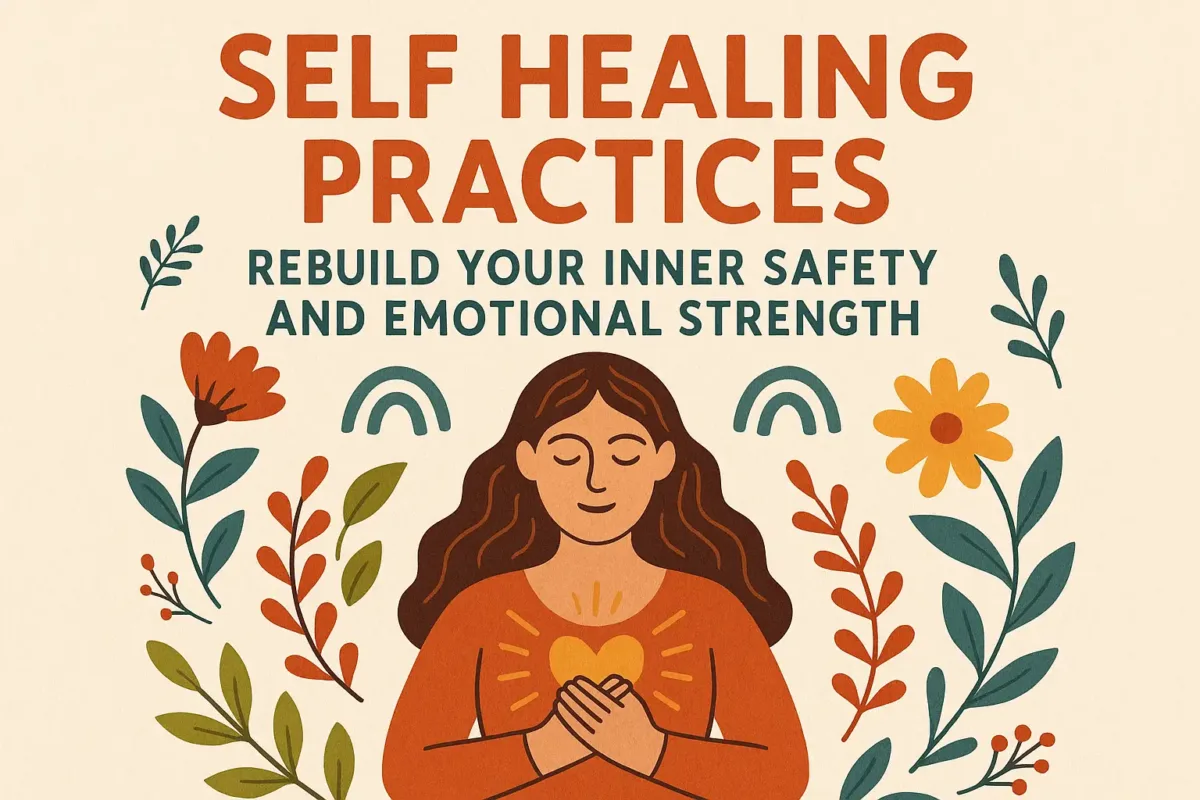
2. The Hand-on-Heart Reassurance Method
This technique is foundational in self-healing because it integrates self-compassion with somatic grounding.
How to practice:
- Place one hand on your heart.
- Breathe slowly and steadily.
- Whisper to yourself, “I am here. I am safe. I’m not going anywhere.”
It may feel uncomfortable at first — especially if self-soothing was never modeled for you — but with repetition, your body begins to trust your presence. This is how self healing practices begin: through self-reassurance, not self-criticism.
3. Naming Your Feelings Without Judgment
The brain calms down when you name what you feel. This is called affect labeling, a well-researched emotional regulation tool.
Instead of suppressing emotion, try:
- “I feel anxious.”
- “I feel sad.”
- “I feel overwhelmed.”
- “I feel overstimulated.”
- “I feel lonely.”
- “I feel afraid of being rejected.”
Naming the feeling softens the intensity. It shifts emotional chaos into emotional clarity. This is a core self-healing practice because you cannot heal what you refuse to acknowledge.
4. The 5–4–3–2–1 Sensory Awareness Reset
When your mind spirals, bring your attention back to your senses:
- 5 things you can see,
- 4 things you can touch,
- 3 things you can hear,
- 2 things you can smell,
- 1 thing you can taste.
This interrupts emotional overwhelm and brings you into the present moment, where healing can actually happen.
5. Releasing Stored Tension Through Somatic Movement
Emotions live in the body. Stress, anger, grief — they all leave physical imprints. Somatic movement gives your body permission to exhale what it’s been holding.
Try:
- slow stretching,
- mindful walking,
- shaking out your hands,
- rolling your shoulders,
- loosening your jaw,
- gentle swaying to soft music.
Somatic release is not about fitness. It is about letting your body complete stress cycles instead of trapping them inside.
Self-Compassion as a Daily Self-Healing Practice
Self-healing requires a shift from self-attack to self-support. Many people speak to themselves in ways they would never speak to a friend: harsh, impatient, unforgiving. This constant inner criticism keeps your nervous system on edge and makes healing harder.
Self-compassion is not indulgence. It is emotional truth-telling with kindness.
Try journaling prompts like:
- “What does my heart need today?”
- “Where am I being too hard on myself?”
- “What fear is hiding beneath my reaction?”
- “What do I wish someone had said to me when I was hurting? Can I say it to myself now?”
When you respond to your pain with kindness, your healing accelerates. You begin to trust that you can be honest with yourself without being punished.
Mindful Emotional Check-Ins Throughout the Day
Healing does not only happen in big moments; it happens in small check-ins woven through an ordinary day. Every few hours, pause for 10–20 seconds and ask:
- What am I feeling right now?
- What does my body need?
- What story is my mind telling me?
- How can I support myself gently in this moment?
These tiny moments of mindfulness interrupt autopilot and bring you back into conscious choice. Over time, these check-ins create a more regulated, self-aware baseline.
Boundaries as Self-Healing
You cannot heal in environments that constantly re-injure you. Boundaries are not selfish; boundaries are self-respect. One of the most powerful self healing practices is learning to protect your peace.
That might mean:
- spending less time with people who drain or belittle you,
- saying no to commitments that exhaust you,
- limiting access for those who repeatedly cross your limits,
- creating quiet time for yourself without apology,
- turning off notifications to reclaim your nervous system.
Every time you set a healthy boundary, you tell your body, “Your safety matters to me.” This message is deeply healing.
Recognizing and Softening Protective Patterns
Everyone has protective behaviors that once kept them safe but now create pain. These might include:
- people-pleasing,
- shutting down emotionally,
- overworking to avoid feeling,
- giving too much in relationships,
- avoiding vulnerability,
- constantly anticipating rejection,
- perfectionism that never lets you rest.
These are not moral failures. They are survival strategies. Self-healing means understanding the pain beneath them and gently choosing healthier responses over time.
You might ask yourself:
- “What is this pattern trying to protect me from?”
- “Is there a kinder way to meet that need now?”
- “What would I do if I trusted that I was worthy of care and respect?”
Answering these questions honestly, even in small ways, is a powerful self-healing practice.
Letting Yourself Receive Support
Self-healing does not mean doing everything alone. Hyper-independence is often a trauma response — a belief that no one will be there for you, so you must carry everything yourself. True healing includes letting yourself receive support.
This might mean:
- talking to a therapist or counselor,
- joining a support group or healing community,
- opening up to a trusted friend,
- working with a coach or mentor,
- leaning into spiritual or faith-based support if that resonates with you.
Letting yourself be supported is not weakness. It is a recognition that healing happens faster and deeper when you don’t have to hold everything alone.
Books That Deeply Support Self-Healing
Certain books hold the kind of wisdom that can walk with you through seasons of healing, offering language, insight, and direction exactly when you need it. Within the Mayobook collection, several titles beautifully complement your journey with self healing practices:
- Breaking Free – a powerful guide for unraveling emotional wounds, childhood patterns, and inner blocks that keep you stuck. It helps you understand and release what your nervous system has been holding for years.
- The Magic of Positive Affirmation – offers language tools and gentle affirmations that can reshape the way you speak to yourself, turning your inner critic into an inner ally.
- The Art of Social Intelligence – essential if your healing involves improving relationships, setting boundaries, and navigating emotional dynamics with more confidence and clarity.
- Think Like Mandela – a beautiful exploration of resilience, inner strength, and calm dignity under pressure — qualities that deeply support long-term emotional healing.
- Rise to Lead – supports your journey into personal power, confidence, and becoming the version of yourself who no longer lives from old wounds but from grounded self-trust.
If these themes resonate, you can explore more soul-nourishing, transformational reads at https://mayobook.com/shop.
FAQ – Self Healing Practices
What are the most effective self healing practices for emotional pain?
Emotional pain responds best to practices that reconnect you with your body and inner world: mindful breathing, somatic grounding, self-compassion journaling, naming your feelings, and gentle nervous system regulation. These tools help you process emotion safely rather than suppressing it, which is essential for long-term healing.
How do I start self-healing when I feel overwhelmed?
Start small. Choose one simple practice — such as three slow breaths, placing a hand on your heart, or writing one honest sentence in a journal. Healing doesn’t require dramatic action; it requires compassionate consistency. As you build trust with yourself, you can add more practices over time.
Can self healing practices replace therapy?
Self-healing can complement therapy but does not replace professional support when it is needed. A skilled therapist can provide tools, perspective, and safety that are hard to create alone, especially when dealing with trauma, deep grief, or complex emotional patterns. Many people find the most growth when they combine personal practices with therapeutic support.
Why do I feel more emotional when I start self-healing?
When you finally slow down and turn toward your inner world, feelings that have been suppressed often rise to the surface. This can feel intense, but it is not a sign that self-healing is “not working.” It is usually a sign that your body and heart finally feel safe enough to release what they’ve been holding. Move gently, and seek support if it feels like too much to carry alone.
How long does it take for self healing practices to work?
Some benefits happen quickly, like moments of calm after breathing practices or somatic movement. Deeper changes — such as softened triggers, improved boundaries, and more self-compassion — tend to unfold over weeks and months. Healing is not linear; what matters most is staying in relationship with yourself through the process.
Are self healing practices spiritual or scientific?
They can be both. Many practices — breathwork, grounding, emotional naming — are backed by nervous system and psychological research. Others draw on spiritual or contemplative traditions. You can choose and combine practices that fit your beliefs and needs. What matters is that they help you feel more present, safe, and connected to yourself.
What is the first step in self-healing?
The first step is honest, compassionate awareness. Notice where you hurt, where you feel numb, what triggers you, and how you speak to yourself. You do not have to fix everything at once; you simply have to stop pretending you are okay when you are not. Naming your reality is powerful.
Can self healing practices help with anxiety or trauma?
Yes, especially when they focus on nervous system regulation, grounding, and self-compassion. Practices like the 4–6 breath, somatic movement, and hand-on-heart reassurance can gently reduce anxiety and help your body feel safer. For trauma, it is often wise to pair self-healing with professional trauma-informed support.
What if self-healing feels uncomfortable or scary?
It is normal for self-healing to feel uncomfortable at times. You are moving against old patterns of avoidance, denial, or distraction. If your practices feel overwhelming, slow down. Choose gentler tools, shorten the time you spend, or focus on external grounding (like sensory awareness) rather than deep inner work until you feel more stable.
How do I know if I am making progress with self healing practices?
Progress can look like smaller emotional reactions, more ability to pause before responding, greater clarity about your needs, softer self-talk, better boundaries, or feeling less drained by situations that used to overwhelm you. These changes may be subtle at first, but they are real and meaningful signs of healing.
Conclusion: You Are Worth the Time It Takes to Heal
Healing is not a race and not a performance. It is a relationship — with your body, your emotions, your past, and your emerging self. You will not always get it “right.” There will be days when old patterns resurface or when you feel tired of trying. That does not erase the healing already happening within you.
Every breath you take with intention, every boundary you set in self-respect, every moment you choose compassion over self-attack, every time you pause and listen to your heart — all of it counts. All of it is part of your healing.
You do not have to have everything figured out. You just have to stay willing to take one gentle step at a time. And you are already doing that now.
If this spoke to you, you’ll love the full information in this book; begin your deeper reading → See the book on Mayobook.