
Anxiety has a way of convincing you that something terrible is about to happen, even when you are just sitting in your living room, scrolling your phone, or trying to fall asleep. Your heart races, your breath shortens, your thoughts spiral, and your body feels like it is on high alert. If you are searching for mindfulness for anxiety, you are likely longing for a way to step out of that constant storm and into a quieter, steadier inner space.
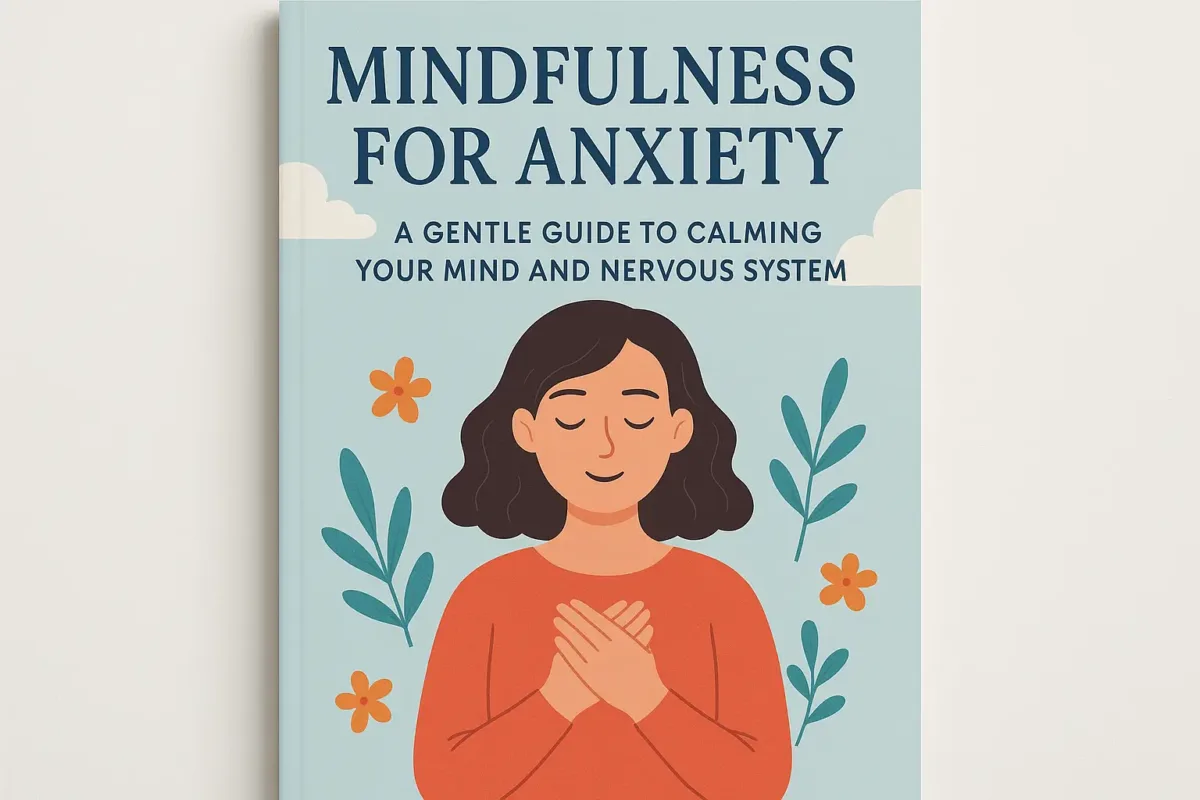
Mindfulness is not about forcing yourself to “think positive” or pretending everything is fine. It is the opposite. Mindfulness invites you to turn toward your experience with gentleness instead of running from it or fighting it. When anxiety shows up, mindfulness helps you say, “I see you. I feel what is happening in my body. I will stay with myself through this.” Over time, this kind of compassionate presence can soften the intensity of anxiety, quiet overthinking, and help your nervous system feel safer.
In this guide, we will explore how mindfulness works in the brain and body, why it is such a powerful support for anxious minds, and practical ways to weave mindfulness into everyday life. You will learn simple practices, nervous system tools, and emotional insights that make mindfulness for anxiety feel less like an abstract idea and more like a living, breathing support you can lean on in real moments of overwhelm.
What Is Mindfulness, Really?
Mindfulness is often described as “being present,” but that phrase can feel vague. A more helpful way to understand it is this: mindfulness is the practice of paying kind, nonjudgmental attention to your experience in the present moment. It is not about forcing calm. It is about seeing clearly and responding gently.
When you are anxious, your attention gets pulled into the future – imagining worst-case scenarios – or trapped in the past, replaying memories and worries. Mindfulness for anxiety teaches you to come back to what is actually happening right now: your breath, your body, the sensations in your chest, the feeling of your feet on the ground, the sounds around you. This anchoring in the present can interrupt the mental time travel that feeds anxiety.
Importantly, mindfulness is not cold observation. It is warm awareness. You are not standing outside yourself like a harsh critic; you are sitting beside yourself like a kind friend.
How Mindfulness for Anxiety Works in the Brain
Anxiety is not “just in your head” in the dismissive sense – but it does involve your brain. Brain imaging studies show that anxious minds often have increased activity in the amygdala (the brain’s alarm system) and the default mode network (connected to self-referential thinking and rumination). When these systems are overactive, you may feel constantly on edge or stuck in loops of overthinking.
Mindfulness practices have been shown in research to reduce amygdala reactivity over time and quiet the default mode network. In simple terms, this means:
- Your inner alarm does not go off as easily or as loudly.
- Your mind spends less time spinning in repetitive, anxious thoughts.
By repeatedly bringing your attention back to the present moment – your breath, body sensations, sounds, movement – you are training your brain to step out of automatic fear loops. It is like strengthening a mental muscle that says, “Yes, those thoughts are there, but I do not have to be swallowed by them right now.”
The Role of the Nervous System: Why You Cannot “Think” Your Way Out of Anxiety
Many people feel frustrated that they cannot simply talk themselves out of anxiety. They logically know that there is no immediate danger, yet their body keeps reacting as if there is. This is because anxiety is not just cognitive; it is also deeply physiological.
When your nervous system is in a chronic state of threat, it sends signals of tension, racing heart, shallow breath, and hypervigilance. Mindfulness for anxiety becomes powerful when it includes not only awareness of thoughts, but awareness of the body and direct regulation of the nervous system.
Simple mindful practices like lengthening your exhale, feeling your feet on the ground, or placing a hand on your heart while breathing slowly send a signal of safety to the body. As your nervous system calms, your thoughts often become less intense. Instead of trying to argue with every anxious thought, you are addressing the deeper system that generates them.
Mindful Breathing Practices to Calm Anxious Waves
Breathing is one of the most accessible tools in mindfulness for anxiety because it is always with you. The aim is not to breathe perfectly, but to use your breath as an anchor when your mind is spiraling.
The 4–6 Soothing Breath
This simple pattern gently engages your body’s relaxation response:
- Inhale through your nose for a count of four.
- Exhale slowly through your mouth for a count of six.
- Repeat for one to three minutes.
The slightly longer exhale signals safety to your nervous system. As your body begins to slow down, your thoughts often soften, too.
The Hand-on-Heart Breath
This practice combines breath with self-compassion:
- Place one hand on your chest and, if it feels comfortable, one on your belly.
- Feel the warmth and weight of your hands.
- Breathe in gently through your nose and imagine the breath moving under your hands.
- As you exhale, silently say to yourself, “I am here with you.”
Mindfulness for anxiety is not only about calming the body; it is also about reminding yourself that you are not alone inside your own experience. This hand-on-heart gesture can be deeply soothing when you feel scared or overwhelmed.
Bringing Mindfulness to Anxious Thoughts
One of the most distressing parts of anxiety can be the thoughts: “What if something terrible happens?”, “What if I fail?”, “What if I lose everything?”, “What if this never gets better?” These thoughts can come in rapid, repetitive waves that feel impossible to stop.
Mindfulness does not ask you to control or eliminate your thoughts. Instead, it invites you to change your relationship with them. Instead of getting tangled in every anxious story, you begin to notice thoughts as mental events that arise and pass, like clouds moving across the sky.
When an anxious thought appears, you might practice:
- Labeling it gently: “This is a worry thought,” or “This is my anxious brain trying to protect me.”
- Noticing where you feel it in your body: tightness in the chest, a knot in the stomach, tension in your face.
- Bringing your attention back to your breath or to something you can see, hear, or touch right now.
The goal is not to prove your thoughts wrong in the moment, but to not let them swallow your entire awareness. Over time, this mindful distance can reduce the power anxious thoughts have over your day.
Mindfulness for Anxiety in Everyday Moments
Formal meditation – sitting quietly and focusing on your breath – can be extremely helpful for anxious minds, but it is not the only way to practice mindfulness. You can weave mindfulness for anxiety into ordinary activities so that your whole day becomes more supportive.
Here are a few simple examples:
- Mindful walking. As you walk, even for a minute or two, notice the feeling of your feet touching the ground, the movement of your legs, the air on your skin, the sounds around you. Each time your mind drifts into worry, gently bring it back to your steps.
- Mindful showering. Notice the temperature of the water, the feeling of it on your skin, the scent of the soap, the sound of the water. Let this be a time when you practice coming back to your senses instead of planning or replaying conversations.
- Mindful transitions. Before you move from one activity to another – closing your laptop, leaving your home, getting into bed – take three slow breaths and notice how your body feels. Name it kindly: “Tired,” “wired,” “tense,” “okay,” “heavy.” This helps your system integrate instead of rushing all day in a state of constant activation.
These small practices may seem insignificant, but they are powerful. Each one is a moment where you choose presence over autopilot, and that choice slowly rewires how your mind and body respond to anxiety.
Compassion: The Heart of Mindfulness for Anxiety
Without compassion, mindfulness can become another way to judge yourself – noticing your anxious thoughts and then criticizing yourself for having them. True mindfulness for anxiety is always paired with a kind, understanding attitude toward your own experience.
When you notice anxiety, try shifting your inner language from, “What is wrong with me?” to, “Of course I feel this way; a part of me is scared and trying to protect me.” You might even place a hand on your heart and say, “This is hard, and I am doing the best I can.”
Self-compassion does not mean you give up on change. It means you create an inner environment where change is more possible. When you feel safe inside your own mind, you are more willing to stay with your feelings instead of running from them – and staying with them mindfully is what allows them to move through.
Gentle Mindfulness Practices for Intense Anxiety
Sometimes anxiety feels so overwhelming that sitting still and focusing inward can make it worse. In those moments, you can still practice mindfulness for anxiety – but in a way that feels grounding rather than overwhelming.
Consider:
- 5–4–3–2–1 grounding. Name five things you see, four things you can touch, three things you hear, two things you can smell, and one thing you can taste. Do this slowly, with curiosity.
- Object focus. Hold an object – a mug, a stone, a piece of jewelry – and explore it with your senses. Notice its weight, temperature, texture, color, little details you usually overlook.
- Movement-based mindfulness. Gently stretch, walk, or sway while paying attention to the sensations of movement in your body.
These practices help you stay in the present moment without diving too deeply into your internal landscape when it feels overwhelming.
Mindfulness, Anxiety, and Emotional Healing: Going Deeper
Over time, mindfulness for anxiety can do more than just help you cope with anxious episodes; it can uncover the deeper emotional patterns beneath them. You may begin to notice that your anxiety spikes most when you feel inadequate, unlovable, out of control, unseen, or unsafe with other people.
Mindfulness gives you a way to sit with those deeper emotions without being drowned by them. Instead of pushing them away, you can say, “I see you. I feel the sadness, the fear, the anger.” Bit by bit, this presence can heal old wounds that anxiety has been trying to guard for years.
Sometimes, this deeper healing is best supported by therapy, coaching, or trauma-informed guidance. Mindfulness is not a replacement for professional help when it is needed – but it is a powerful companion that can make healing work more effective and more compassionate.
Books to Support Your Journey with Mindfulness for Anxiety
You do not have to walk this path alone. Certain books can feel like wise companions while you learn to meet your anxiety with presence and tenderness. Within the Mayobook collection, a few titles beautifully complement the journey of mindfulness for anxiety:
- Breaking Free – a powerful guide for understanding and releasing emotional patterns, inner knots, and past experiences that quietly fuel anxiety beneath the surface.
- The Art of Social Intelligence – helps you navigate relationships, social cues, and communication with more ease, which can significantly reduce social anxiety and relational overthinking.
- The Magic of Positive Affirmation – offers language tools and gentle affirmations that can reshape the way you speak to yourself when anxiety is loud.
- Think Like Mandela – a beautiful exploration of resilience, calm inner strength, and dignity under pressure – qualities that support long-term anxiety healing.
- Rise to Lead – ideal if anxiety shows up when you step into leadership, visibility, or big life decisions, offering grounded guidance on courage and self-trust.
If these themes speak to you, you can explore more soul-nourishing, transformational reads at https://mayobook.com/shop.
FAQ – Mindfulness for Anxiety
How does mindfulness actually help with anxiety?
Mindfulness helps with anxiety by training your brain to stay anchored in the present moment instead of getting lost in fearful future scenarios or past regrets. It also helps you notice anxious thoughts and body sensations with more distance and kindness, rather than immediately reacting to them. Over time, this can reduce the intensity and frequency of anxiety and help your nervous system feel more regulated.
Do I have to meditate every day for mindfulness to work for anxiety?
Daily meditation can be very helpful, but it is not the only way to practice mindfulness for anxiety. You can bring mindful awareness into everyday activities like walking, showering, eating, or making tea. The key is consistency: even short, regular moments of mindful presence can create meaningful change over time.
What if focusing on my body makes my anxiety worse?
For some people, especially those with trauma histories, turning inward can initially feel overwhelming. In that case, it can be helpful to start with external mindfulness – focusing on sounds, sights, or objects around you – rather than immediately diving into inner sensations. Grounding practices like 5–4–3–2–1 or focusing on an object can be gentler entry points. Working with a trauma-informed therapist can also provide support.
Can mindfulness replace medication for anxiety?
Mindfulness is a powerful support for anxiety, but it is not a universal replacement for medication. Some people find that mindfulness practices reduce their anxiety enough that they can manage without medication; others benefit most from a combination of both. Medication decisions should always be made in collaboration with a qualified healthcare professional who understands your specific situation.
How long does it take for mindfulness for anxiety to start working?
Some people notice small shifts in calm and clarity even after a single mindful breathing practice. However, deeper changes – like reduced reactivity, less rumination, and a kinder relationship with anxiety – usually develop over weeks or months of consistent practice. Think of mindfulness as a long-term relationship with your inner world rather than a quick fix.
Do I need to clear my mind for mindfulness to help my anxiety?
No. The goal of mindfulness is not to have a perfectly quiet mind. Instead, it is about noticing your thoughts without being carried away by them. Even if your mind is busy, you can still practice mindfulness by gently returning your attention to your breath, body sensations, or the present moment again and again.
Is mindfulness for anxiety suitable for everyone?
Many people benefit from mindfulness for anxiety, but it is not one-size-fits-all. For some, especially those dealing with severe trauma or dissociation, certain practices may need to be adapted. It can be helpful to start slowly, choose grounding practices that feel safe, and seek guidance from a mental health professional if you are unsure.
How can I stay consistent with mindfulness when I feel too anxious or busy?
Start small and attach mindfulness to things you already do each day. Take three conscious breaths before opening your email, practice a one-minute body scan in bed at night, or do a short grounding practice after you park your car. When mindfulness feels woven into your life rather than added as a huge extra task, it becomes easier to maintain even on busy or anxious days.
Can mindfulness make my anxiety worse?
Sometimes, when you first slow down and turn toward your inner experience, it can feel like your anxiety has gotten louder. In reality, you are simply becoming more aware of what has been there all along. If this feels too intense, you can shorten practices, focus on external grounding, or seek support. Over time, with gentle pacing, mindfulness tends to reduce overall anxiety rather than increase it.
What is the difference between mindfulness and relaxation for anxiety?
Relaxation techniques aim specifically to calm the body and mind, while mindfulness is about meeting whatever is present – including anxiety – with awareness and compassion. Relaxation can be a helpful part of mindfulness for anxiety, but mindfulness goes further by changing your relationship with your thoughts and feelings, not just their intensity.
Conclusion: You Are Not Your Anxiety
Mindfulness for anxiety is not about becoming someone who never feels afraid or overwhelmed. It is about becoming someone who can stay with themselves in those moments instead of abandoning, attacking, or fearing their own experience. Each time you breathe consciously through a wave of anxiety, each time you notice a worry thought and gently return to the present, each time you place a hand on your heart and say, “I am here with you,” you are changing the way you relate to yourself.
You are not your anxious thoughts. You are not your racing heart. You are the awareness that notices them and the compassion that holds them. That awareness, that compassion, is bigger than any storm. And with practice, it can become the ground you stand on, even when the winds of anxiety blow strong.
If this spoke to you, you’ll love the full information in this book; begin your deeper reading → See the book on Mayobook.